MSB Marathon T-Minus 7 Weeks: “I Can Live on a Good Compliment for Two Weeks”

IMG_8393Goals for This Past Week:

  • 15 mile long run
  • Run at least 1 mile at 7:00/mile pace
  • Eat extra clean so I don’t feel weighed down for the Turkey Trot, but if that means a bite or two of sugar, oh well!
  • Make time for a massage and/or serious foam rolling; the hips are feeling TIGHT

How did I do?

Continue reading

Should We Be Worried About Privacy on Strava?

This afternoon I Googled myself, as I do from time to time.  You know, just to see what’s out there and to make sure no one is writing libelous things.  The first several hits were the usual — things related to my job and my race results — but then I saw a result that surprised me: there, third from the bottom was my full name and the words “Runner on Strava.”

For those of you who don’t use Strava, some brief background.  Strava is an app that uses GPS on your phone or other device to track activity such as biking or running.  With a premium account, I’m told you get all kinds of cool data and have the ability to set goals within the app.  Even with a free account, Strava will store your runs (including pace, distance, a map, elevation, splits, whether it was a “long run” or a “commute,” etc.) and data such as your weight.  Strava will talk to other apps like MyFitnessPal if you link them.  There is also a social element to it — you can connect with friends or post from the app on social media, and you can see how your pace over certain stretches compares to other runners’.

IMG_7885

I use a free Strava account to track my runs.  I’ve really, really enjoyed using the app and have been very impressed with its accuracy and data features.  I haven’t tapped into the social element: I only have one “follower” on Strava, and we do actually know each other in real life. Perhaps ignorantly, I always thought of Strava as having a ton of my data but being contained in the little app on my phone.  I never thought about whether I would have a Strava profile on the internet for all to see…

Continue reading

Orangetheory “Hell Week” Recap!

FullSizeRender (5)

As you probably quickly realized when reading this blog, I’ll do a lot for a commemorative t-shirt.  This past week, I earned a free t-shirt and lived to blog about it by completing five days of Hell Week at my local Orangetheory studio.  Here is my recap of the pain and glory.

Continue reading

Mapping (and Starting!) My Mississippi Blues Marathon Training Plan

Screen Shot 2015-10-25 at 9.59.02 PM

I’ll start by saying that there are millions of philosophies about race training.  Here I’ll share what has worked for me, and what I am planning to do for the Mississippi Blues Marathon, but this is not the only way (or even the best way) to train for a marathon.  I’d love to hear thoughts about what has worked well for other people.

In short, I like to make a rough sketch of a training plan for each marathon so that I don’t get completely off-track, and so that I can anticipate holidays, travel, and work events and prepare accordingly.  Usually I just jot it down on a calendar or in a Googledoc (or now, in a blog post).  The most important runs for marathon prep are the long runs, so I make sure to note what my goal long run is for each week, and then I have the option to do that run any day during the week (but usually Saturdays or Sundays).  I don’t generally write the week’s non-running activities (Orangetheory, pilates (upcoming post!), barre, yoga (also upcoming post!), swimming, etc.), or my run commute, in my training plan, and while I do sometimes put in shorter runs, all of those are subject to change.  Each week is different, and I vary based on my own schedule and how I’m feeling.  Missing a few runs isn’t going to totally kill your training.  Really.  I take at least one, but usually two, rest days each week. Continue reading

Change of Pace (Heh Heh): Training for a 5K

So… I am signed up for my first ever turkey trot.  I am not sure how I’ve avoided doing a turkey trot in the past, but I guess it boils down to the fact that if I want to run three miles, I usually just go do it.  Anyway, my husband and I are going to run one near his hometown along with his family this Thanksgiving, and I think it should be fun.  And of course I am not trying to break any world records… but I thought it might be a nice *change of pace* to focus for the next few weeks on increasing my speed at a shorter distance.  But it begs the question: what would my pace be for 3.1 miles?  And how do I improve it?

Continue reading

Apple Watch for Running–Is It Worth It?

When the Apple Watch was first announced, I was not particularly impressed.  I had a Jawbone tracking my steps, a Garmin GPS watch for long runs, and an iPhone for everything else.  I had recently started using Strava on my iPhone for my runs, and I liked how nicely it stored my data and automatically split splits, so the clunky Garmin was getting phased out.  I definitely didn’t need a new watch, right?

But then I had dinner with someone who had just bought an Apple Watch, and he was talking about how nice it was, especially how it provided notifications right on your wrist.  He wasn’t talking about using it for running necessarily–but he liked it for his daily life.  I was intrigued, so the next day we went to the Apple Store, where I found out that the Watch is pretty cool AND most importantly, it works with Strava.  So I could control and view Strava from my wrist during my runs, without having to pull out my phone.  Yes, I would have to carry my phone with me, but I had already started doing that to use Strava.  I bought one on the spot and now really love my Apple Watch.  Here are the best things I’ve identified about it:

(1) The TIME!  OK, this is obvious, but I never wore a watch regularly, and it is amazing to have the date and time right there on my wrist.

IMG_7884

(2) The WEATHER!  The main screen of the Apple Watch is customizable, and I have mine set up to show the outdoor temperature (along with the time, date, calendar, battery life, and activity).  This is great for getting ready in the morning, or for choosing my outfit before I head out for a run.  No need to open an app on my phone, or worse, open up my laptop and navigate to a website.  Love it.

(3) Texts and email notifications.  Still not directly related to running, but perhaps the BEST feature/appeal of the Apple Watch.  You can set it up to push notifications to your watch, so it gives you an alert when you get a new text message or, in my case, a new work email.  You can quickly determine if the message is something you need to worry about, or something you can quickly dismiss.  This is great for life but also for running.  I used to sometimes sneak out for a mid-day run, but I was always paranoid that I would get some important email summoning me back to my desk.  If I heard the dreaded chime from my phone during a run, I had to pull out my phone from where ever I had it buried, open the mail app, wait for the email to come through, and assess whether it was important.  With the watch, I get a little tap telling me to glance at the subject line.  I can read the whole email if I want, but often the subject and sender is all I need to know.  No fumbling.  It is easy to “dismiss” or “clear” messages and alerts that don’t need immediate attention.  You can respond to texts right in the Watch (although the functionality of this is limited).  For emails, you need to open the phone.  But the key is the first triage–the evaluation of “Is this just a routine mass-email from the IT department?  Or is this an urgent request from my boss?”

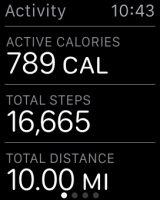
(4) Steps and standing.  Like a FitBit or Jawbone Up, the Apple Watch tracks your steps throughout the day.  It does not track sleep (it gets charged at night), but it does have a cool feature that alerts you each hour and tells you to stand for at least a minute.  I have a “goal” set on the Watch to stand for at least 1 minute for each of 12 hours during the day, to engage in 30 minutes of “Activity” and to burn 530 calories (“Move”).  My Apple Watch gives me periodic updates of where I stand on those goals, or I can check them in the Activity app on my phone or directly in the Watch.  Steps and activity recorded through the Watch can be automatically shared with other apps such as My Fitness Pal.

IMG_7881IMG_7882IMG_7883

(5) Finally, THE RUNNING.  There are a few ways to track running and workouts with the Apple Watch.  My favorite is to sync the Watch to the Strava app.  I can open Strava on my Watch, start my run, change activities, monitor my (current) pace, monitor my total time and distance, monitor the time of day (something I couldn’t do easily on my Garmin), and pause or end a workout all on the Apple Watch.  You get all the benefits of Strava, including a map of where you went, your splits, your pace, etc. etc.  All of the data is viewable in the Strava app.  When using the Watch for running, I usually keep my phone either in my FlipBelt or tucked away in a backpack or hydration pack. I have not tried Map My Run or any other running apps on the Watch.

Here is the starting Strava screen on the watch with my runs from the week (I hit the shoe icon to start a new run):

IMG_7885

Apple did build in a native Workout app, which is housed in “Activity” on your phone (the same app that tracks your steps, standing, etc. with the Apple Watch).  I don’t use this for running, and I think there are MANY better tools for tracking runs.  And there are some serious gaps–I don’t think Apple Workout would be great for yoga or pilates, for instance.  However, the Workout app can be nice for some other activities, such as spinning or Orangetheory.  You select the type of activity and then either a goal time, goal distance, or an “open” workout (I choose the latter).  The Watch basically uses your heart rate to estimate your calories while you engage in these activities.  I do not think it is especially accurate (compared to, say a chest monitor), but it is one way to track that activity and check your exertion in a general way.  I just keep the “Heart Rate” window open during the exercises.

You can also open and control music apps such as Pandora through the Watch.  But if you have Strava open, you need to navigate to Pandora and then go back to Strava to have that as the open screen.

Other Notes

The Watch is not waterproof so you can’t take it swimming.  (Although the woman at the Apple Store told me that Tim Cook showers with his…) It and its apps are sometimes buggy–for instance, failing to re-connect via Bluetooth when I come within range of my phone, or clearly mis-counting my mileage on Strava (which had only happened a few times and is very obvious; I have found Strava with the Watch to generally be very accurate).  If you haven’t tried on an Apple Watch, you should, and notice how it senses when you are flipping it up to look at it.  Very cool, people.  The Apple Watch only works with an iPhone.   The Watch starts at $350 and I highly recommend getting the least expensive model.  The smaller screen fits best on my tiny girl wrist and is not so small that I can’t see what I am doing, although men might try on the larger size to see what they prefer.

Does anyone else have an Apple Watch that they use for running?  Have you considered getting one?  I’m happy to answer any (not-super-technical) questions!

Why Running to Work is the Best Commute Ever, and How To Do It

I will start by saying there is an entire blog devoted to this topic, and the blogger there covers this issue very, very well.  In fact, I read several of his posts before adopting the run commuter lifestyle.  So here you go:  The Run Commuter.

But I will add my few cents here.

IMG_7775

I started running to work about six months ago when I changed jobs.  My new office is 2.5 miles from my home, and there is not a particularly direct way to get there using the public transportation options.  In fact, I am not even sure if I could save time by using public transportation.  And it would certainly cost more than running.  Biking was another option, but I am less comfortable with city biking, and I would have to lock up my bike in a dungeon each morning and unlock it each night.  That sounded like a lot of time taken up by logistics for such a short ride.

I figured that if it took me about 30 minute to run to my new job, that was a reasonable commute time–very similar to my walk to my old job, and about what many people drive or Metro from nearby suburbs.  And of course I knew I was physically capable run the 2.5 miles (whether I would WANT to would be another question…).  Here are the main benefits I’ve identified:

  1. I get a minimum workout each day.  Most days, I have a nice, quick jog for 2.5 miles to work, and then I walk home in the evening.  I burn close to 500 calories just getting to and from work.  I can extend my morning run if I want, but even the shorter run has impacted my fitness.  I can tell that my legs are looking more toned, and my race time is back under 4 hours.  I still try to do some other workout about 4 days a week, including a long run if I am in training, Pilates, yoga, lifting at the gym, or Orangetheory.
  2. Instead of causing me stress, my commute helps me mentally prepare for work in the morning and decompress at the end of the day.  I come home at night having left the stress on the sidewalk.
  3. Running saves a lot of money compared to taking a bus or Metro.  I’ve only had to take an Uber a few times, usually during serious evening rain storms this past summer or if I am stuck at work super late.  The only cost of running was the initial investment in the backpack, plus getting shoes slightly more often.
  4. Good for the environment.  Keep your Prius; I’ve got LEGS.

But there is some planning that goes into becoming a run commuter. Continue reading

Orange…what? Orangetheory.

A month ago,  I had never heard of Orangetheory.  But when someone in my office mentioned it, I was completely intrigued and signed up for my first free trial class.  Five classes later, I’m ready to report back to you!  Whether it is here on this blog or somewhere else, I strongly recommend reading a bit about Orangetheory before starting. Also, show up at least 20 minutes early to your first class to get situated.  I know a lot of fitness studios say that and then leave you standing there for 19 minutes.  But for Orangetheory, they really mean it.  It’s a little complicated.

What is Orangetheory? 

Orangetheory Fitness is a heart rate-based workout class, which uses intervals of rowing, running, and floor exercises to burn calories and build strength and endurance.  Its underlying philosophy is that when we engage in high-intensity intervals (reaching at least the “orange zone” of 84% or higher of maximum heart rate), our metabolism keeps running and burning more calories throughout the day (i.e., “afterburn”).

Continue reading

Virginia Creeper Marathon 2011 & 2012 (Marathons Number 3 and 8, State Number 2–Virginia)

Ahh the old Creeper.  This race is near and dear to my heart because I absolutely love the town where it takes place.  If you are looking for a small race, a Virginia race, a race that is gentle on your joints, or a little weekend getaway in March–THIS IS IT FOLKS.

Virginia Creeper Trail Marathon 2011 & 2012

Race Website:  Creeper Trail Marathon.

Size: 100 runners.  Full marathon only.

Month: March

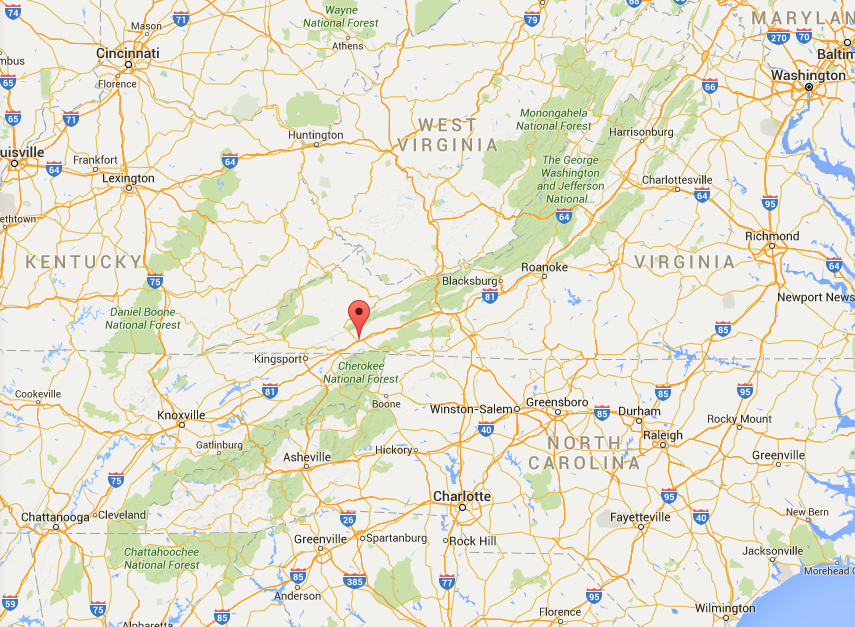
Location:  The race starts and ends in Abingdon, Virginia, a historic town nestled in the far southwest corner of Virginia, near Bristol, Tennessee.
abingdon

Logistics:  The closest airport to Abingdon is the Tri-Cities Regional Airport in Tennessee.  Roanoke Airport is also relatively close.  Abingdon is a 6 hour drive from DC. If you fly in, you will likely need to rent a car to get to Abingdon from the airport and around town.  There is little public transportation.  There are several campsites, cabins, and bed and breakfasts in the Abingdon area (including Damascus, Virginia).  There are also a few not-as-fancy hotels and one very nice hotel.  Once in Abingdon, day-of logistics are very easy because of the race’s small size.  Packet pick up is the morning of the race.  Note that most restaurants and shops in Abingdon are closed on Sundays.  Two very notable exceptions for yummy post-race food: Heartwood and Harvest Table (closes at 2:30).

Weather/What I Wore:  Abingdon is a beautiful town, and the Creeper is a lovely trail.  Unfortunately, this is not the absolute best time of year to visit.  Each time I ran this marathon, I had cloudy weather, and in 2012, it was rainy.  You will likely need to bundle up for the start of this marathon, but it is easy to shed layers as you pass the main spectator area a few times during your run.

Course/Terrain:  The vast majority of this race takes place on the Creeper Trail, through a series of out-and-backs.  The course is very flat, on a gravel and dirt path.  There are some rocks, twigs, and roots, but I’ve been fine running in road shoes.  Generally the runners of this race are very supportive, but most of the trail is not suitable for spectators, so there will be some solitary and quiet moments.  This is probably not the best race for a first marathon unless you have a running buddy.

creeper

Speed:  This race is flat and moderately fast.  The footing may slow you down a bit if it has recently rained.  My first time, it took me 4:05, a PR at the time, but I beat that time a few weeks later by 10 minutes at the Country Music Marathon in Nashville.  The second (rainy) time I ran the Creeper, it took me 4:01, 17 minutes slower than what I had just run at the Rock N Roll New Orleans Marathon.

Race Amenities:  This is a very low-key, no-frills event.  There are ample water stops, but do not expect free GU and a brass band for entertainment.  No t-shirt or medal, but finishers are given a nice paperweight.

Overall:  Like It.  Why not Love? Mainly because of its out and back structure (which makes it a little boring) and the fact that it is in March and not a prettier month.

Marine Corps Marathon Recap (Marathons Number 2 and 9, State Number 2–Virginia)

The vast majority of this race is in DC but it technically counts for Virginia because it begins and ends there…  plus DC isn’t a state.  Next up on blasts from marathons past…

Marine Corps Marathon, 2008 & 2012

Continue reading